
Which Treatment Is Right for You?
With so many options available, identifying the right treatment modality for your orthodontic needs may seem confusing. While it may be tempting to focus on a single factor such as appearance, every smile is different, and determining the best treatment option is a highly individualized process.
What works for one patient may not be a good fit for another. Patient age, lifestyle, ability to comply with treatment instructions, and the specific issues to be resolved must be taken into consideration.
You Have Options
Not all treatment options are suitable for every case, and some patients will have greater flexibility to choose from among the options.
Understanding the differences between traditional braces, clear/ceramic braces, lingual (behind-the-teeth) braces (InSmile), and clear aligners (Angel Aligners and Invisalign) will help you ask the right questions during your consultation.
An Orthodontic Treatment Comparison
Below is a comparison of the advantages, disadvantages and treatment requirements of traditional metal braces, clear braces, lingual braces, and clear aligners.
| Traditional Metal Braces | Clear Braces | Lingual Braces | Clear Aligners | |
|---|---|---|---|---|
| Description | Metal brackets and wires bonded to the front of your teeth | Ceramic brackets and metal wires bonded to the front of your teeth | Metal brackets and wires bonded to the back of your teeth | Custom-made removable plastic aligners |
| Visibility | High (most visible) | Moderate | Low (hidden behind teeth) | Low (nearly invisible) |
| Removable? | No | No | No | Yes |
| Typical Treatment Length | 18-22 Months | 18-22 Months | 12-18 Months | 6-18 Months |
| Case Severity | Mild to severe | Mild to severe | Mild to severe | Mild to severe* |
| Compliance Level Required | Low | Low | Low | High |
| Food Restrictions | Yes | Yes | Yes | No |
| Oral Hygiene Difficulty | Moderate | Moderate | Moderate-High | Easy |
| Speech Adjustment | Minimal | Minimal | Initially | Initially |
| Patients | Children, teens, adults | Teens and adults | Adults and professionals | Teens and adults |
*Severe cases may warrant brackets being used at some point during treatment
A Closer Look at Your Treatment Options
Traditional Metal Braces
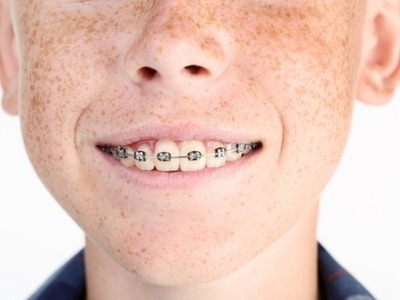

Traditional metal braces consist of several components that work together to gradually move teeth into proper alignment.
First, metal brackets are attached to the teeth using an enamel bonding system and dental cement. Then, a thin metal wire is attached to the brackets, connecting one tooth to another and engaging the slot of the bracket, which has a prescription for each tooth. The colored tie holds the wire in the bracket slot and applies gentle pressure to guide tooth movement.
Depending on the treatment plan, additional components such as elastic bands may be used to correct bite issues. Elastics attach to hooks on the upper and lower brackets and pull either the upper or lower jaw backward to correct an over- or underbite.
Traditional braces are used to treat mild to severe orthodontic issues for patients of all ages. Because braces are fixed to the teeth and do not rely on patient compliance, they are an ideal option for children.
One of the primary advantages of traditional braces is that they are fixed to the teeth and work continuously. You don’t have to remember to put them on every morning or worry about misplacing them. They are also durable and can cost effectively treat complex orthodontic concerns.
There are a few minor drawbacks to consider when it comes to traditional braces. Because they are made of metal, they are the most noticeable type of orthodontic treatment. Certain foods that are hard, sticky or chewy, such as popcorn, gum and hard candies, should be avoided because they can damage the brackets or wires. Additionally, brushing and flossing may require more time and care, as food and plaque can easily become trapped around the braces.
Clear Braces
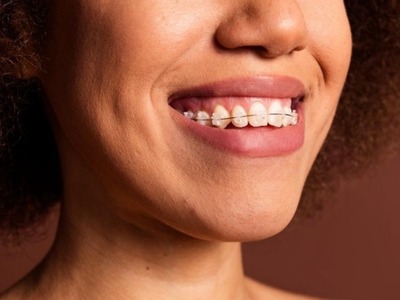 Clear braces, also known as ceramic braces, function identically to and correct similar orthodontic issues as traditional metal braces. The main differences between the two treatment options are their durability and appearance.
Clear brackets are made from ceramic that matches the color of your teeth, and the elastics are translucent, making them more discreet than their metal counterpart.
Although clear braces are durable, ceramic is more fragile than metal and more likely to chip or crack. While both kinds of braces address the same concerns, the severity of each case must be considered; metal braces are often a better option for more drastic corrections.
Staining is a common concern among patients considering ceramic braces. While the brackets will not stain, the adhesive used to attach the brackets to the teeth and the clear elastics can. Although this can give the impression of discoloration or staining over time, this is rarely a major issue. Depending on the treatment plan, the elastics will typically be changed every 8 weeks.
Considering their care requirements and durability, ceramic braces are generally better suited for adults and older teens, though younger children with high esthetic demands will also benefit.
Lingual (Behind-the-Teeth) Braces (InSmile)
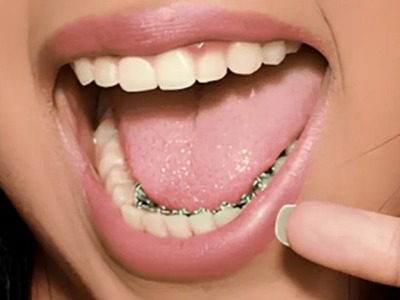
Lingual braces offer many of the same benefits as traditional braces, but are fixed on the back of the teeth, making them the most discreet treatment option. They address the same orthodontic concerns as traditional and ceramic braces such as crowding, spacing issues, and overbites and underbites.
This treatment plan is often an ideal choice for adults, working professionals, public-facing individuals and patients who want a virtually invisible treatment option without removing aligners throughout the day.
Because lingual braces are custom-made, they typically cost more than traditional and clear braces or clear aligners. Orthodontists take digital scans or impressions to create an appliance that fits the unique shape and positioning of each patient’s teeth. This typically requires more specialized planning and manufacturing than braces and contributes to a higher treatment cost.
Patients wearing lingual braces may also experience tongue irritation and temporary speech changes that require an adjustment period. They must also be vigilant about their oral hygiene routine to keep their teeth healthy during treatment.
Clear Aligners
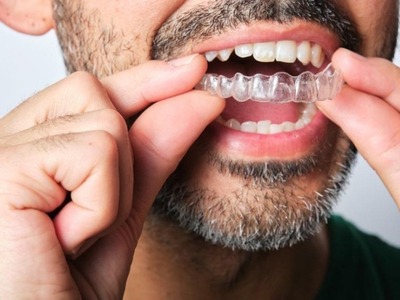
Clear aligners use a series of custom-made removable trays to gradually move teeth into their desired positions. They are made from a smooth, transparent thermoplastic material that fits snugly over the teeth. These trays are replaced periodically throughout treatment as the teeth shift into position. Oftentimes, attachments – small anchors fixed to the teeth – are used to latch onto the aligners. These attachments are commonly used on rotated, intruded or extruded teeth.
Because they are nearly invisible when worn, clear aligners have become a popular alternative to traditional braces. They are a favorite among teens and adults who want a discreet treatment option and are committed to wearing their aligners as directed, typically 20 to 22 hours per day. Unlike braces, aligners can be removed to brush and floss and during mealtimes, so patients can eat and drink without restrictions.
Clear aligners can effectively treat many common orthodontic concerns including mild to moderate crowding, spacing issues, overbites and underbites or other alignment problems. More complex cases can often be treated with a combination of aligners with several attachments, elastic rubber bands and possibly the adjunctive use of brackets for part of the treatment.
Get a Free Consultation
At Bluebird Orthodontics, we create a customized treatment plan for each patient. Dr. Frank and her team will take X-rays, create a 3D image of your teeth, and consider your specific orthodontic needs, treatment goals, lifestyle and personal preferences when determining the best fit.
If you’re looking for orthodontic care in Commack or one of the surrounding communities in central Long Island, contact our office today to schedule your free consultation and learn which orthodontic treatment is right for you.